Tabla Classes in Haldwani: Traditional Bols, Taals & Stage Accompaniment
Master the rhythmic heart of North Indian music. Nandini Sangeet Kala Kendra provides authentic, structured Tabla training covering drum anatomy, finger dexterity, classical rhythmic cycles, and Prayag Sangeet Samiti examination diplomas.
The Tabla is the primary acoustic percussion instrument of North Indian classical, devotional, and light music. It consists of a pair of twin hand drums: the Dayaan (right wooden treble drum tuned to the tonic note) and the Bayaan (left metallic/clay bass drum providing resonant modulation). Recognized scientifically for producing harmonic overtones rare among percussion instruments, it is played with intricate finger-and-palm stroke techniques.
Our classes in Kathgodam–Haldwani focus on crystal-clear stroke articulation (Nikhas), steady tempo discipline (Laya), solo repertoire (Kaidas, Relas), and live accompaniment (Sangat) for singers and Kathak dancers.
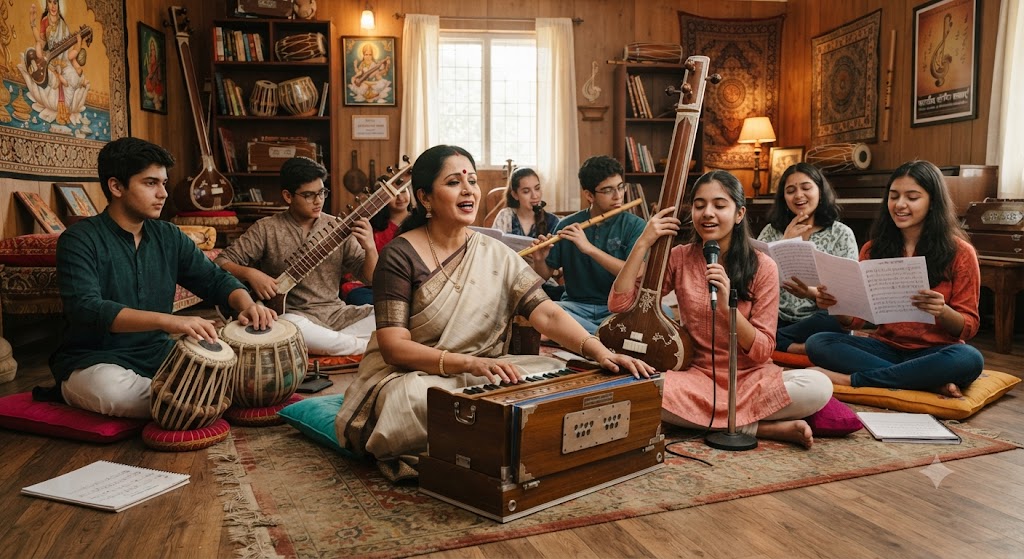
Tabla Fast Facts & Specifications
| Discipline | Tabla Classical Percussion (North Indian Rhythm Tradition) |
|---|---|
| Twin Drums | Dayaan (treble wooden drum in Sheesham/rosewood) & Bayaan (bass metal/clay drum) |
| Core Syllables (Bols) | Na, Tin, Dha, Dhin, Ge, Ke, Tirakita, Dhere Dhere |
| Essential Taals | Teental (16 beats), Dadra (6 beats), Keharwa (8 beats), Roopak (7 beats), Jhaptal (10 beats) |
| Accompaniment Disciplines | Sangat for Classical Vocal (Gayan), Kathak Dance, and Harmonium |
| Affiliated Examination | Prayag Sangeet Samiti, Allahabad (Junior Diploma to Sangeet Prabhakar) |
| Academy Location | Kathgodam–Haldwani, Nainital, Uttarakhand |
Twin Drum Mechanics & Core Syllables
The acoustic genius of the Tabla lies in its multi-layered animal skin membranes loaded with a specialized iron-rich paste (Syahi):
Dayaan (Right Treble Drum)
Crafted from dense seasoned hardwoods such as Sheesham, Babool, or Mahogany. The skin consists of three concentric acoustic zones: the outer rim (Chati or Kinara), the middle ring (Sur or Maidan), and the central black circular spot (Syahi). Tuned precisely with wooden pegs (Gattas) to the soloist's tonic pitch.
Bayaan (Left Bass Drum)
Constructed from brass, copper, or kiln-fired clay. The Syahi is placed off-center, allowing the performer's wrist and palm heel to glide smoothly across the surface, producing deep pitch modulations (Meend) characteristic of classical Indian rhythm.
Documentary Citations & Authoritative References
Educational and cultural documentation on this page references verified regional, academic, and governmental repositories:
- The Science of Indian Drumming and Tabla Acoustics — Indian Academy of Sciences. Acoustic physics analysis of the harmonic Syahi loading in the Indian Tabla
- Tabla Gharanas and Repertoire — Sangeet Natak Akademi. National documentation of Delhi, Ajrada, Farrukhabad, Lucknow, and Banaras traditions
- Sangeet Prabhakar Tabla Examination Scheme — Prayag Sangeet Samiti, Allahabad. Graded percussive syllabus
Join Disciplined Tabla Classes in Kathgodam
Learn fundamental bols, intricate compositions, and stage accompaniment under experienced mentorship.