Foundational Indian Classical Dance: Aesthetics, Discipline & Grace
Cultivate deep body awareness, rhythmic agility, and expressive confidence. Nandini Sangeet Kala Kendra offers foundational classical dance education rooted in classical Indian aesthetics for beginners of all age groups.
Indian Classical Dance is a sacred and codified performing art tradition rooted in ancient Sanskrit treatises, principally the Natyashastra attributed to sage Bharata Muni and the Abhinaya Darpana of Nandikeshvara. Unlike recreational folk or contemporary dance, classical dance is defined by systematic division into three complementary dimensions: Nritta (pure rhythmic dance), Nritya (expressive dance with gestural meaning), and Natya (dramatic enactment).
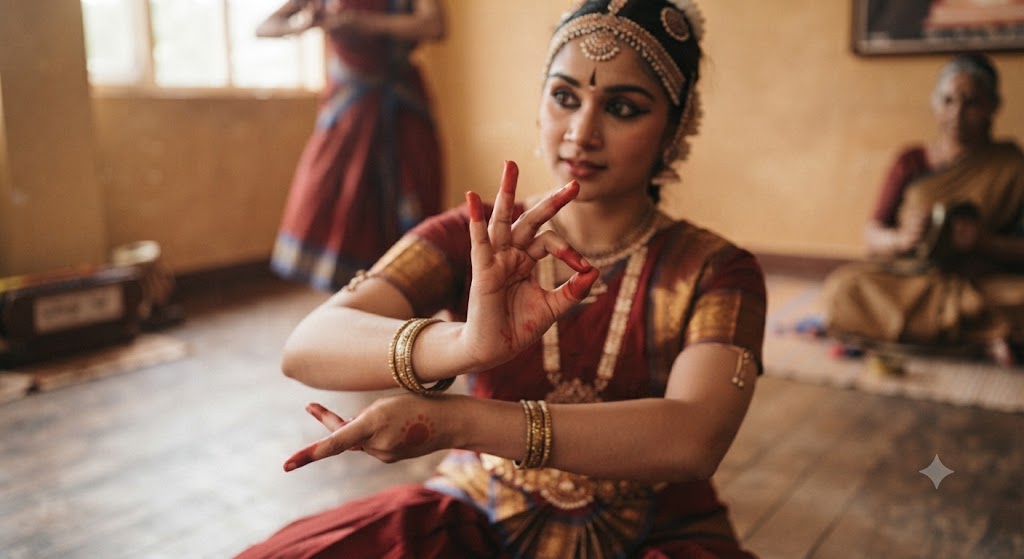
Our academy in Kathgodam–Haldwani grounds students in core posture, rhythmic coordination, and traditional hand gestures, providing an authentic foundation for long-term artistic excellence.
Classical Dance Curriculum Overview
| Discipline | Foundational Indian Classical Dance & Movement Pedagogy |
|---|---|
| Primary Core Style | Kathak-Centric Classical Training with Natyashastra Principles |
| Lead Faculty | Ms. Sonika Joshi (~20 years dance experience) |
| Key Benefits | Spinal posture, physical stamina, cognitive neuro-motor rhythm, grace, stage confidence |
| Target Age Groups | Young Beginners (5+), School Students, College Youth, Adult Learners |
| Theoretical Grounding | Natyashastra (Bharata Muni) & Abhinaya Darpana (Nandikeshvara) |
| Studio Location | Kathgodam–Haldwani, Nainital, Uttarakhand |
Key Developmental Dimensions of Classical Dance
Classical training transforms physical motion into a disciplined language of beauty and cognitive harmony:
1. Posture & Spinal Alignment
Students develop core stability, upright spinal poise (Angashuddhi), and shoulder alignment. Proper footing distributes body weight evenly, protecting the joints and enabling grounded yet effortless kinetic movement.
2. Rhythmic Synchronization
Training internalizes Laya (tempo) across steady metrics. Dancers learn to feel fractions of a beat (Matras), coordinating micro-movements of feet and hands with live acoustic rhythms.
3. Cognitive & Expressive Memory
Mastering combinations of Mudras, eye movements, and complex bol sequences cultivates enhanced memory, mental focus, emotional equilibrium, and stage poise that benefit all aspects of life.
Documentary Citations & Authoritative References
Educational and cultural documentation on this page references verified regional, academic, and governmental repositories:
- Natyashastra: English Translation & Commentary — Dr. Manomohan Ghosh / Asiatic Society. Foundational Sanskrit treatise on performing arts, dramaturgy and body movement
- The Cognitive & Neurological Benefits of Dance Training — Indian Journal of Performing Arts. Study on motor rhythm synchronization, bilateral coordination and cognitive health in classical dancers
- Sangeet Natak Akademi Survey on Classical Dance Disciplines — Sangeet Natak Akademi. National documentation of classical training frameworks
Frequently Asked Questions: Classical Dance
Indian classical dance requires formal grounding in rhythm grammar (Taal), physical alignment, and codified gestural vocabulary (Hasta Mudras). While commercial dance styles prioritize quick choreographies, classical dance builds lifelong physical discipline, emotional maturity, and artistic depth.
For children, classical dance enhances motor skills, bilateral coordination, spatial awareness, and musical sensitivity. It fosters patience, cultural pride, and respectful classroom etiquette rooted in the Indian Guru-Shishya tradition.
Start Your Classical Dance Training in Kathgodam–Haldwani
Join beginner or intermediate classical batches led by experienced mentor Ms. Sonika Joshi.